
Filed Under:
Manufacturing
Published on
September 21, 2026
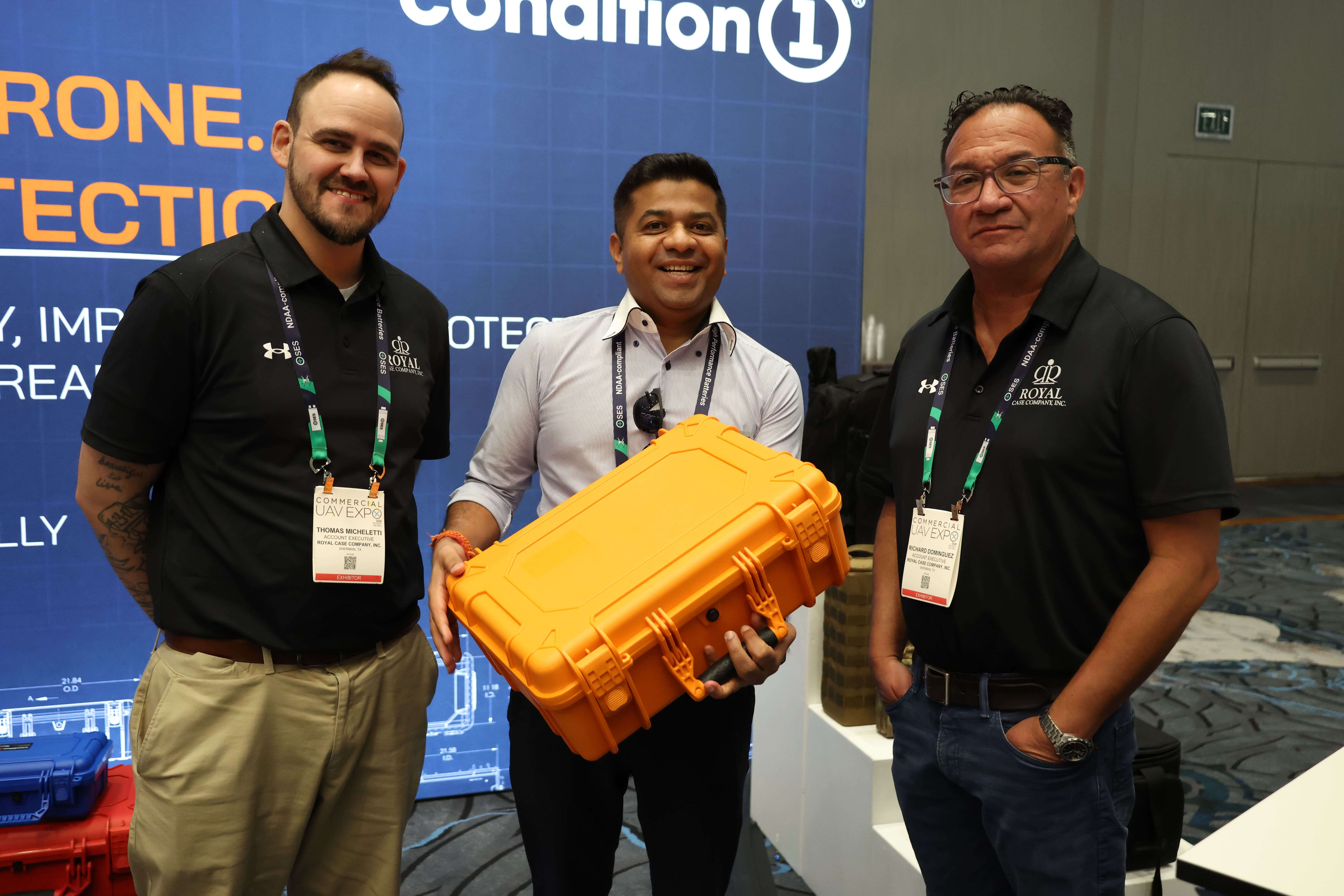
There was one thing we kept noticing at Commercial UAV Expo 2026 in Las Vegas: almost every booth had something that needed a better way to travel. Drones, sensors, cameras, LiDAR systems, controllers, payloads, batteries, ground equipment, and specialized robotics were all represented at this event. The products on the show floor were getting smarter, lighter, and more capable. But they still had to get from Point A to Point B.
That is where protection for drones and drone components becomes more than a packaging decision. For drone OEMs and technology companies, it can become an important part of the product development and supply chain strategy. Commercial UAV Expo, presented by Commercial UAV News, brought together drone manufacturers, operators, technology providers, and decision-makers from industries including construction, energy and utilities, agriculture, public safety, infrastructure, surveying, mining, and drone delivery. The 2026 event took place September 1–3 at Caesars Forum in Las Vegas and drew thousands of professionals from across the commercial UAS industry. For Royal Case, it was a valuable opportunity to have direct conversations with the companies building the next generation of commercial drone and robotics technology.
Royal Case decided to exhibit because the commercial drone and robotics market is a natural fit for what we do. For more than 40 years, Royal Case has designed and manufactured custom carrying solutions for industries that depend on reliable equipment protection. Our capabilities range from hard cases and custom foam to soft-sewn products, EVA cases, ATA cases, molding, thermoforming, and other custom manufacturing solutions.
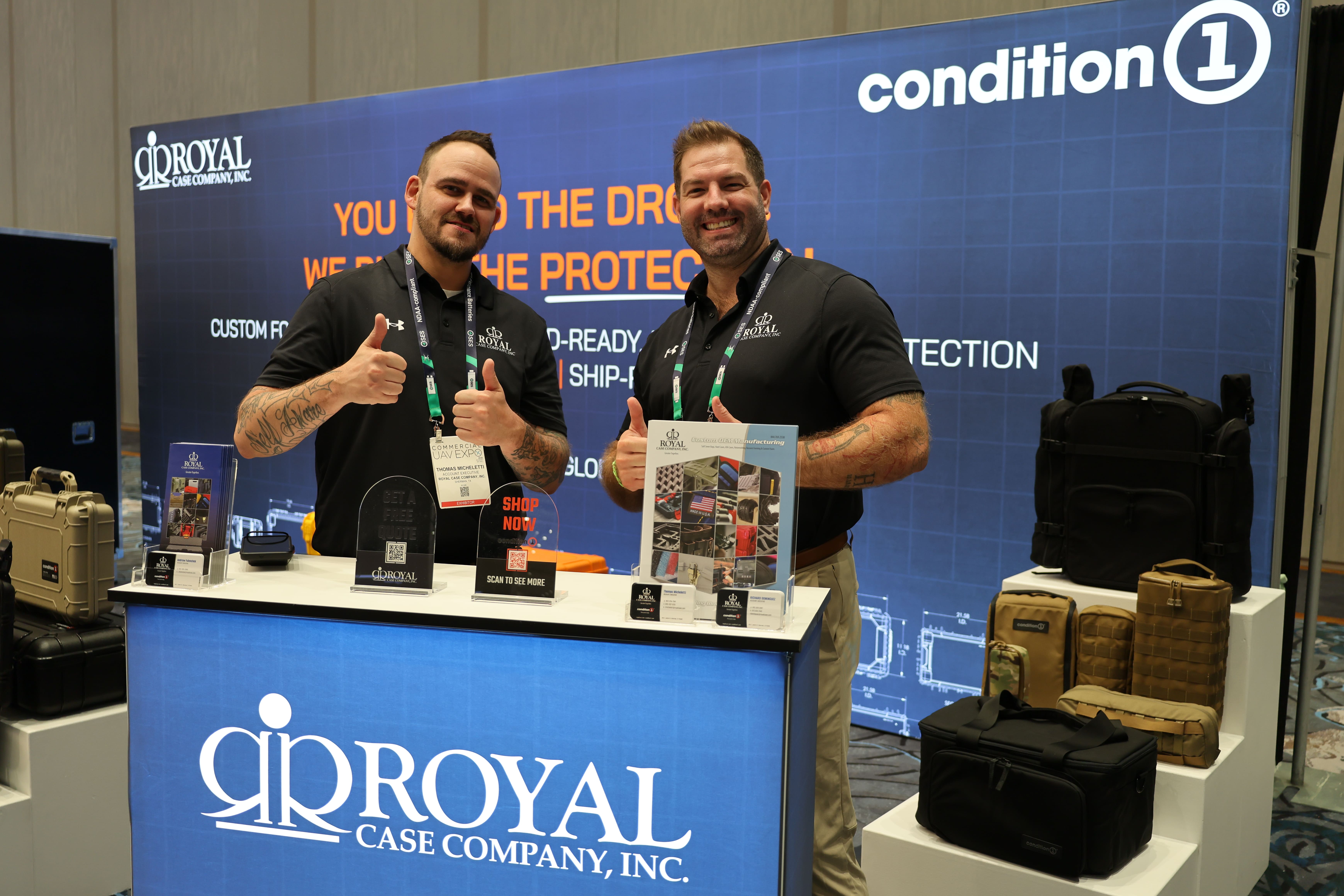
At the show, we saw something that reinforced why this market matters. People would walk past the booth, see a case or custom foam insert, and immediately start thinking about their own equipment. The conversations were not simply about buying a case. They were about how equipment moves through the real world.
How is it transported?
Who is carrying it?
Does it travel by air?
Does it go directly to a job site?
How often will it be opened and closed?
What happens when the equipment reaches a remote location?
Those conversations are where the real value of a custom protection solution starts.
One of the biggest takeaways from the show was surprisingly simple. Many companies had not thought seriously about the case yet. That is understandable. When you are developing a drone, the focus is usually on flight performance, payload capacity, battery life, sensors, software, autonomy, and reliability.
The case often comes later. But waiting until the end can create unnecessary problems. A product may have already been designed around dimensions that make transportation difficult. A stock case may not provide the right level of protection. A foam insert may need to be redesigned multiple times. Tooling and production timelines can become compressed.
And when a product is ready to ship, the protection solution needs to be ready too. Getting a case manufacturer involved earlier gives OEMs more options. The case can be designed around the product instead of trying to force the finished product into an existing solution. That is especially important when the equipment is expensive, delicate, or mission-critical.
A drone may spend most of its working life in the air, but it spends a surprising amount of time being transported. A commercial system can include much more than the aircraft itself. There may be:
Each component can have different protection requirements. A large drone may require a rugged custom hard case with a precisely designed interior. A sensitive sensor may need its own custom foam configuration. An operator carrying equipment into the field may prefer a lightweight backpack or soft case.
This is why protection for drone components deserves the same attention as protection for the aircraft itself. The environment matters too. Equipment may encounter vibration during transportation, repeated loading and unloading, dust, moisture, temperature changes, airline baggage handling, vehicle transport, and the general wear and tear of field work. The right protection solution needs to account for how the equipment will actually be used.
Many of the conversations at the Royal Case booth came back to a few practical questions.
What is the lead time?
For an OEM, the case has to fit into the broader product launch and supply chain schedule.
How much customization is possible?
Drone systems are rarely identical. Dimensions, payloads, accessories, and operating requirements can vary significantly.
What will it cost?
Cost matters, but so does the total cost of damaged equipment, replacement parts, delays, and poor transportation protection.
What can you manufacture?
This was one of the most important conversations. Royal Case is not limited to one type of case. The company offers hard cases, soft cases, custom foam, EVA cases, ATA cases, molding, thermoforming, wood construction, branding, packaging, and more.
Can you help with the logistics?
For OEMs shipping equipment at scale, manufacturing is only one part of the equation. Storage, fulfillment, distribution, and supply chain support can also become important as production grows.
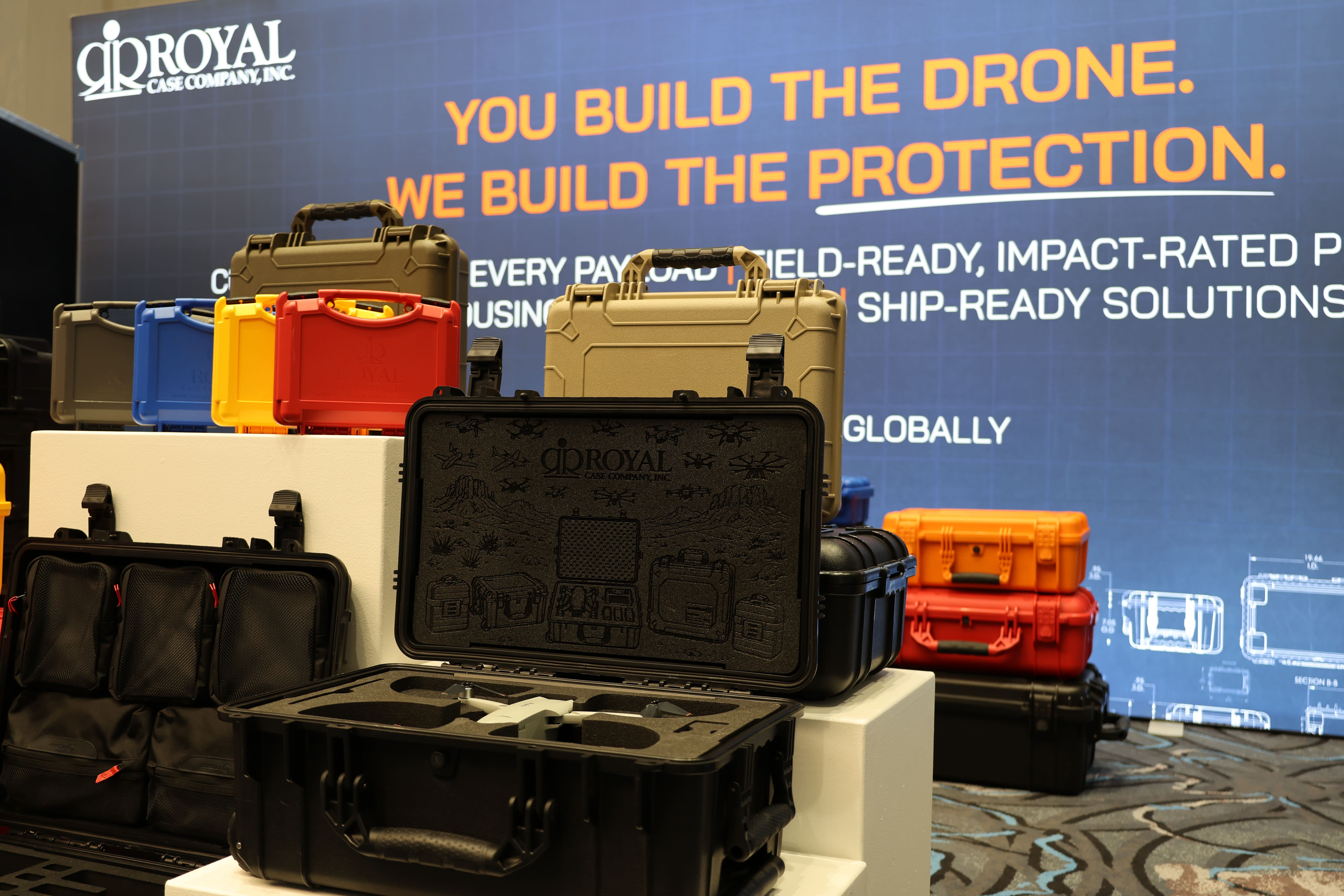
Hard cases were one of the clearest areas of interest. Royal Case custom hard cases can be designed around the dimensions and requirements of the equipment, with options including custom interiors, precision-cut foam, reinforced structures, specialized hardware, and protective features such as waterproof, dustproof, and crush-resistant configurations. For a drone OEM, this means the case can be developed around the actual aircraft and its components rather than treating protection as an afterthought.
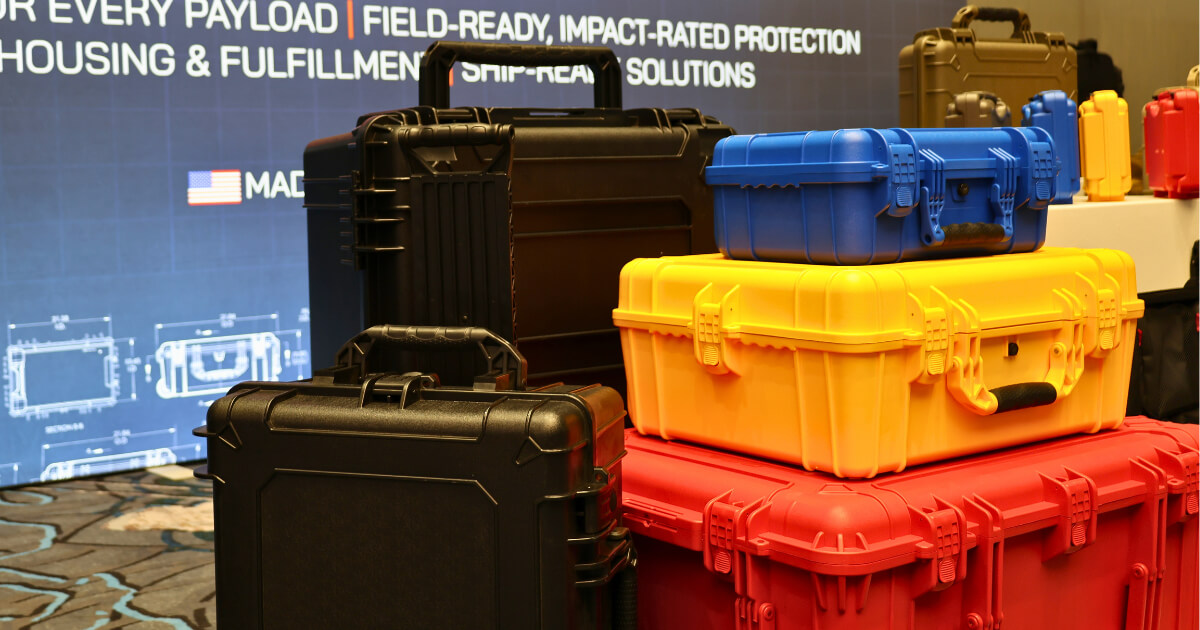
The right outer case is only part of the solution. The interior matters just as much. Royal Case produces custom foam inserts using processes including CNC routing, laser cutting, waterjet cutting, and die cutting. This allows the interior to be designed around the actual geometry of the equipment. For drones, that could mean dedicated spaces for an airframe, controller, payload, sensors, batteries, cables, and accessories.
.jpg)
For equipment that travels frequently, ATA cases can provide another level of protection. Royal Case manufactures ATA cases using materials and construction designed for demanding transportation environments, including laminated plywood, aluminum framing, and steel ball corners. These solutions can be especially useful for companies moving equipment between customers, job sites, trade shows, and field locations.
.jpg)
Not every piece of equipment needs a rigid case. Operators may need backpacks, padded bags, pouches, covers, or other lightweight carrying solutions for equipment they handle regularly. Royal Case manufactures custom soft-sewn products using materials such as nylon, polyester, neoprene, and ballistic fabrics, with options for padding, compartments, reinforced construction, and weather-resistant features. Together, these solutions can create a complete equipment protection system instead of forcing an OEM to manage multiple suppliers for different parts of the same product.

The drone industry is moving quickly. Protection solutions need to keep up. One advantage of working with Royal Case is the breadth of manufacturing capabilities available through one company. Royal Case operates manufacturing facilities in the United States and globally, with U.S. capabilities including soft sewing, plastic molding, custom foam fabrication, ATA case construction, and design and engineering. That creates several advantages for OEMs.
One partner.
Cases, foam, soft goods, and other carrying solutions can be developed through one manufacturing partner.
Custom-first thinking.
Instead of starting with a stock box and working backward, the protection solution can be developed around the actual product and application.
Domestic manufacturing.
Royal Case manufactures products in the USA while also maintaining global production capabilities. For companies concerned with lead times, supply chain control, communication, and sourcing flexibility, that can be a meaningful advantage.
Design and prototyping.
Royal Case's process includes design consultation, prototyping, production, inspection, and delivery, allowing OEMs to evaluate the solution before moving into full-scale production. Most importantly, the conversation can start early. The earlier the protection requirements are understood, the more opportunity there is to create a solution that works with the product rather than around it.
Commercial UAV Expo made one thing clear: this is an industry that is still moving quickly. Drones are becoming more capable. Payloads are becoming more sophisticated. Sensors are getting smaller and more powerful. Robotics and autonomous systems are moving into more industries and more demanding environments. Commercial UAV Expo itself reported a record 2026 turnout, with 3,800 verified professionals from all 50 U.S. states and 65 countries and more than 250 exhibiting companies.
For Royal Case, being part of that conversation was about more than displaying products. It was about listening. Meeting the people developing new equipment. Understanding their challenges. Seeing where existing protection solutions fall short. And finding opportunities to help solve those problems before they become supply chain problems. We are excited to continue working with the companies building what comes next in drones, robotics, sensors, and field technology. Commercial UAV Expo will return to Caesars Forum in Las Vegas September 7–9, 2027.
If you are developing a drone, robotics system, sensor, payload, or other specialized technology, protection should be part of the conversation early. At Royal Case, we can help you evaluate the right combination of custom drone cases, custom foam inserts, ATA shipping cases, and soft carrying solutions based on your equipment and how it will be transported and used. You do not have to wait until the product is finished. Bring us in while it is still being developed, and we can work with your team to create a protection solution that fits the product, the application, and the way your customers use it.


At Royal Case, we are committed to meeting your compliance needs. To ensure accuracy and satisfaction, all compliance requirements must be communicated to us before an order is placed. We can manufacture to nearly any standard, but those standards must be stated in writing prior to production. Please note that compliance not disclosed in advance cannot be guaranteed.


